The origins of the Biblioteca Vallicelliana are closely connected with the figure of Filippo Neri and the Congregation of the Oratory, founded in 1565 and officially recognized by Pope Gregory XIII in 1575 through the papal bull Copiosus in misericordia. The Oratorians devoted particular attention to books: according to their Rule, meals were to be accompanied by the reading and discussion of a religious text. The Library’s first collection consisted of the works owned by Filippo Neri, which became part of the Congregation’s holdings upon his death in 1595. The Vallicelliana Library is already documented in 1581, when Aquiles Estaço bequeathed to Filippo Neri and the Congregation of the Oratory 1,700 printed volumes and 300 manuscripts. These first two collections were subsequently enriched by further donations, including the archive and part of the library of San Giovanni in Venere (1585); the library of Cardinal Silvio Antoniano, the books of Pierre Morin, and those of the Oratorian Giovenale Ancina, Bishop of Saluzzo (1604); the manuscripts from Sant’Eutizio, thanks to the intervention of Abbot Giacomo Crescenzi; and the collection of Father Antonio Gallonio, Filippo Neri’s first biographer (1605).
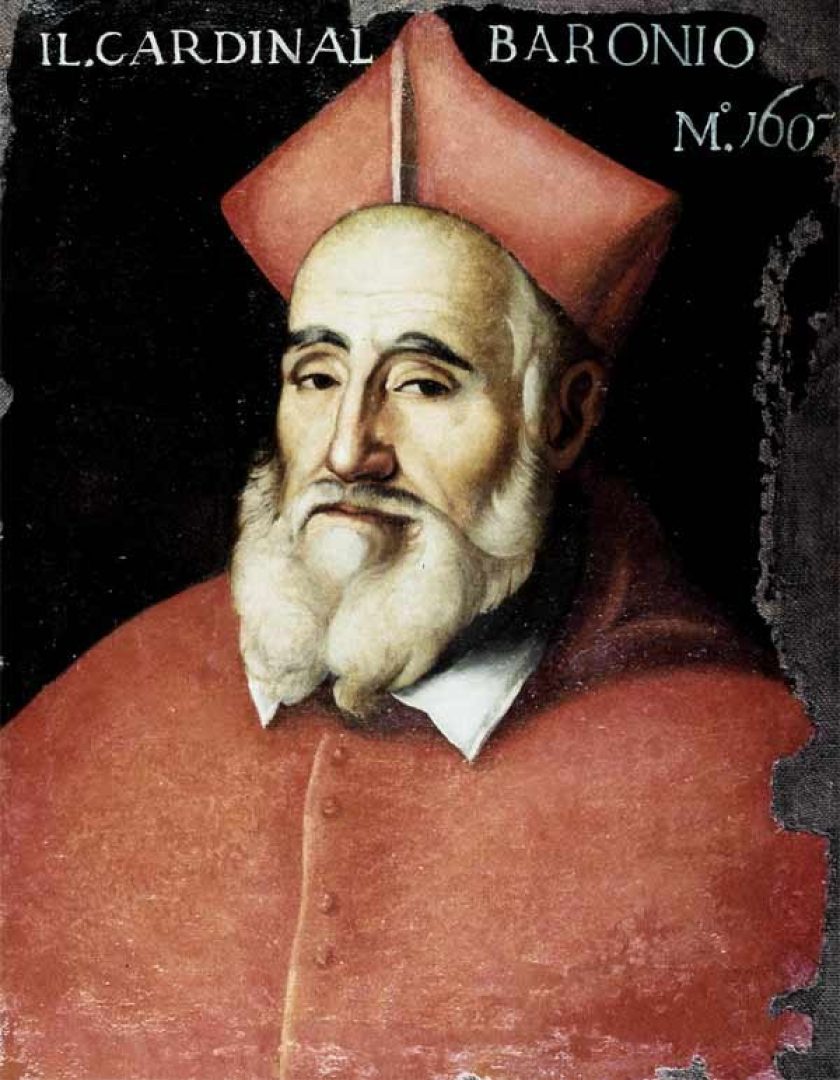
The seventeenth century marked a period of intense cultural activity within the Oratorian community, associated with the publication of Cesare Baronio’s Annales Ecclesiastici, Antonio Bosio’s Roma sotterranea, edited by Father Antonio Severano, and the development of the musical Oratory, a form of spiritual entertainment particularly dear to Filippo Neri, who regarded music as a “fisher of souls.” In 1607, following the death of Cardinal Cesare Baronio, part of his library was inherited by the Congregation’s library. In 1662, the collection of Virgilio Spada was added, comprising a collection of coins, minerals, maiolica, and various curiosities. In 1669, the Library acquired the manuscript collection of the Greek scholar Leone Allacci, custodian of the Vatican Library, consisting of approximately 237 Latin and Greek manuscripts. Further bequests subsequently entered the Library, including those of the Oratorian Fathers Odorico Rinaldi and Giacomo Laderchi, as well as that of Giuseppe Bianchini, heir to the scholar Francesco Bianchini. After being administered by the Ministry of Public Education, the Library is now a peripheral institute of the Ministry of Culture.
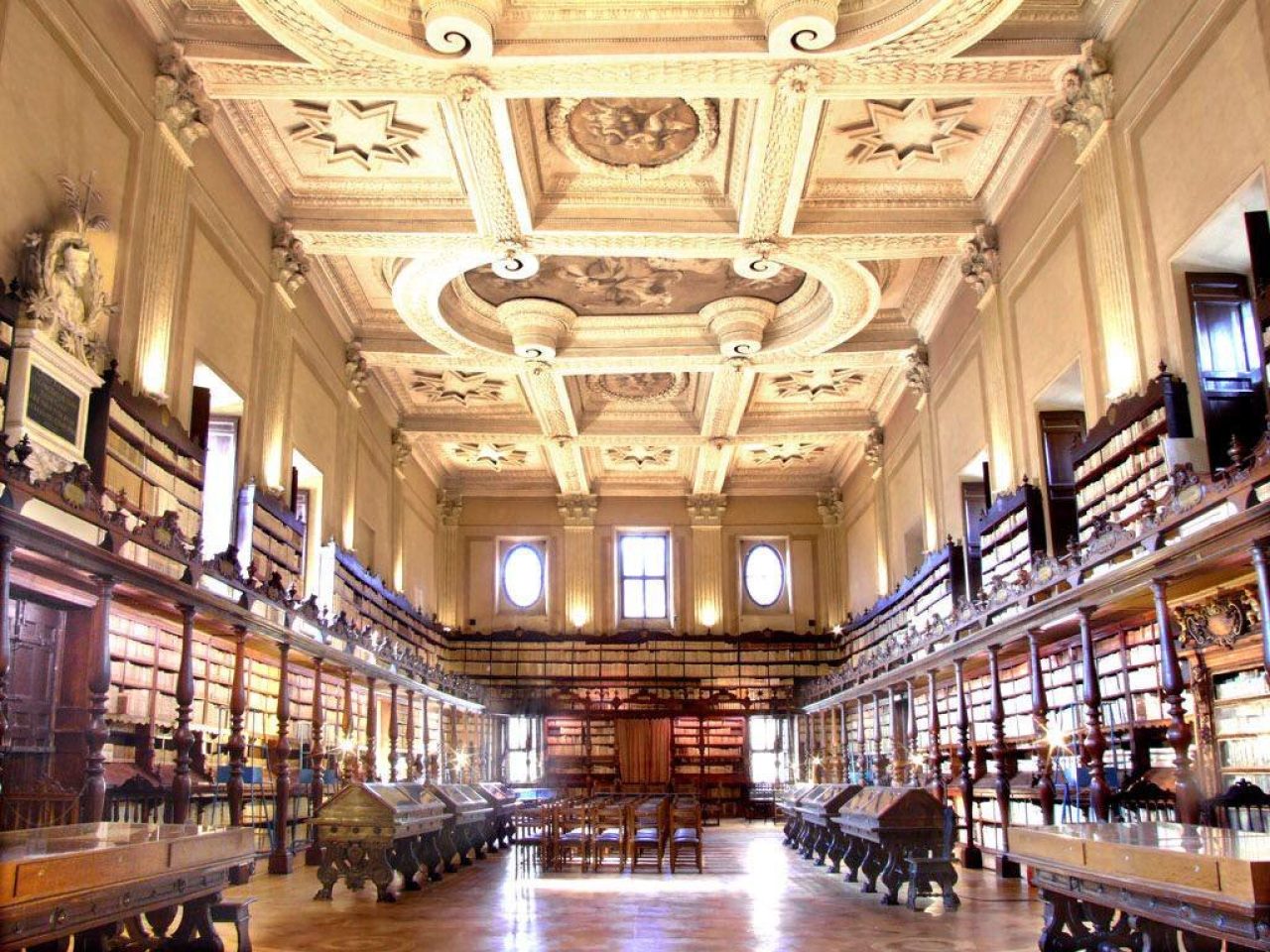
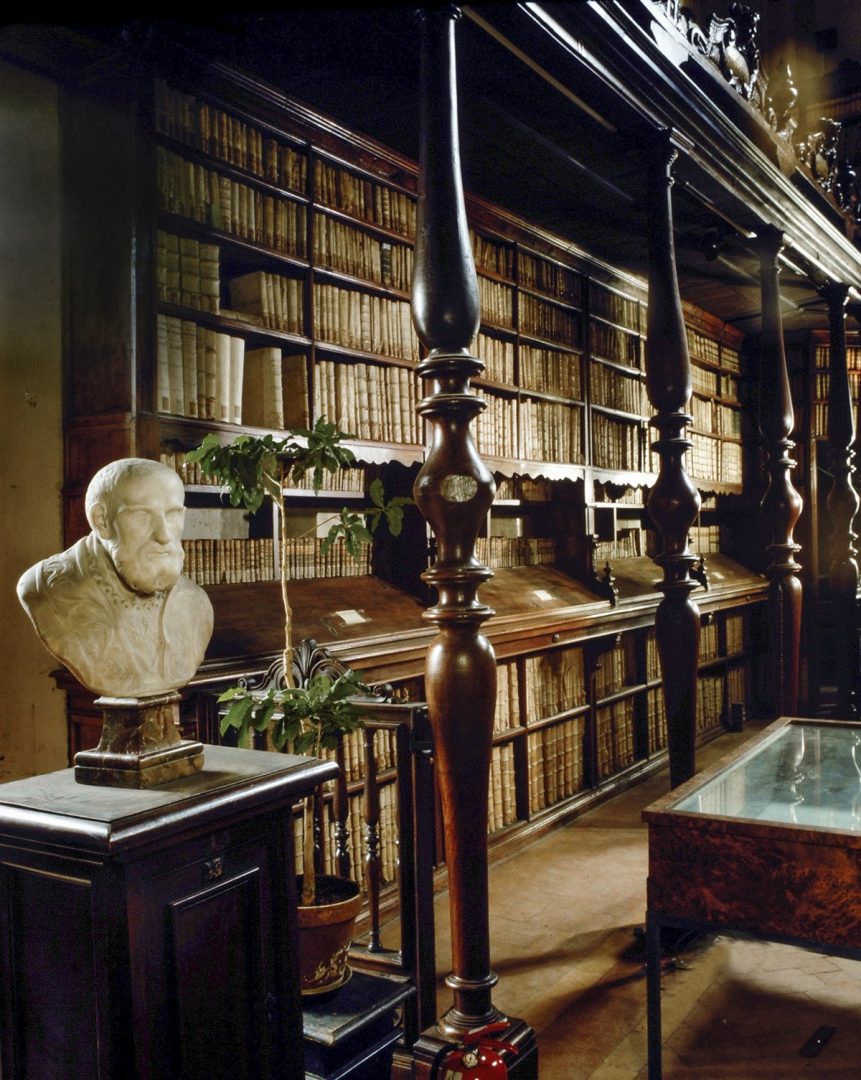
The Library holds approximately 140,000 volumes, including manuscripts, incunabula, printed works, and music. The collections consist predominantly of works on ecclesiastical and religious history, scholarship, patristics, and theology, but also include texts on philosophy—with numerous early commentators on Aristotle—as well as law, botany, astronomy, architecture, and medicine. Its important collection of approximately 3,000 Latin, Greek, and Oriental manuscripts includes codices of exceptional historical and artistic value and antiquity, such as the ninth-century Alcuin Bible (MS B 6), a twelfth-century illuminated Greek Gospel Book (MS B 133), and a precious sixteenth-century Book of Hours (MS A 45). The historic printed collection, comprising works dating from the sixteenth to the nineteenth centuries, consists of approximately 40,000 volumes, most of which are housed in the prestigious Borromini Hall, as well as a small group of incunabula. A substantial part of the historic collection consists of sixteenth-century editions; a distinctive feature is the collection of works once owned by Filippo Neri, preserved in the Libraria. The historic collection also includes periodicals and numerous printed proclamations, edicts, and notices dating from the sixteenth to the nineteenth centuries, most of them issued by the Papal States or dating from the Napoleonic period in Italy. The Vallicelliana’s iconographic holdings include a valuable collection of engravings as well as an important photographic collection.
During the French occupation of Rome (1797–1799), the Library, like many other institutions and sites, suffered extensive looting. In 1810, 49 valuable items were lost, some of which were subsequently recovered in 1837–1838. In 1874, following the law suppressing religious corporations, the Vallicelliana was transformed into a public library. In 1876, the Commission for the Liquidation of Ecclesiastical Assets decided to divide the Congregation’s documents among the State Archives of Rome, the Congregation itself, and the Library. In 1883, the Società Romana di Storia Patria, founded in 1876 with the aim of publishing documents relating to the history of Rome and its province, was given premises within the Library. The decree linking the two institutions entrusted the direction and scholarly management of the Library to the Società Romana di Storia Patria, while its administrative management was assigned to a government-appointed custodian. In 1946, although a functional interdependence between the two institutions remained, their relationship was reorganized: responsibility for the Vallicelliana collections returned to the Library, which was also entrusted with the bibliographic organization and public access to the Society’s collections.
Modern acquisitions, including monographs and periodicals, are selected in accordance with the Library’s cultural interests, with the aim of providing resources for further research, scholarly updating, and the study of the Institute’s historic collections. The Vallicelliana Library promotes projects aimed at enhancing its historical, artistic, and bibliographic heritage and organizes a programme of cultural events in the Institute’s Borromini Hall, including exhibitions, book presentations, conferences, lectures, readings, seminars, workshops, and educational visits, all with free admission.


Participants are solely responsible for managing their own content and for obtaining the necessary permissions for the publication of any materials.
If you are the owner of this profile and do not wish to appear on Rome Art Directory, please contact info@romeartdirectory.com to request its removal.
Post
Story
Whatsapp