Elena Scategni (Rome, 1972) is an Italian artist whose research emerges from the intersection of different creative experiences. Her artistic journey initially developed alongside her work in the fashion industry, an experience that helped shape a distinctive sensitivity towards materials, surfaces, structures and processes of transformation.
For a long time, her artistic practice remained an intimate and private dimension, a kind of inner notebook in which she collected observations, ideas and experiments. In recent years, this research has taken on a more defined form, progressively opening up to dialogue with the public and the broader context of contemporary art.
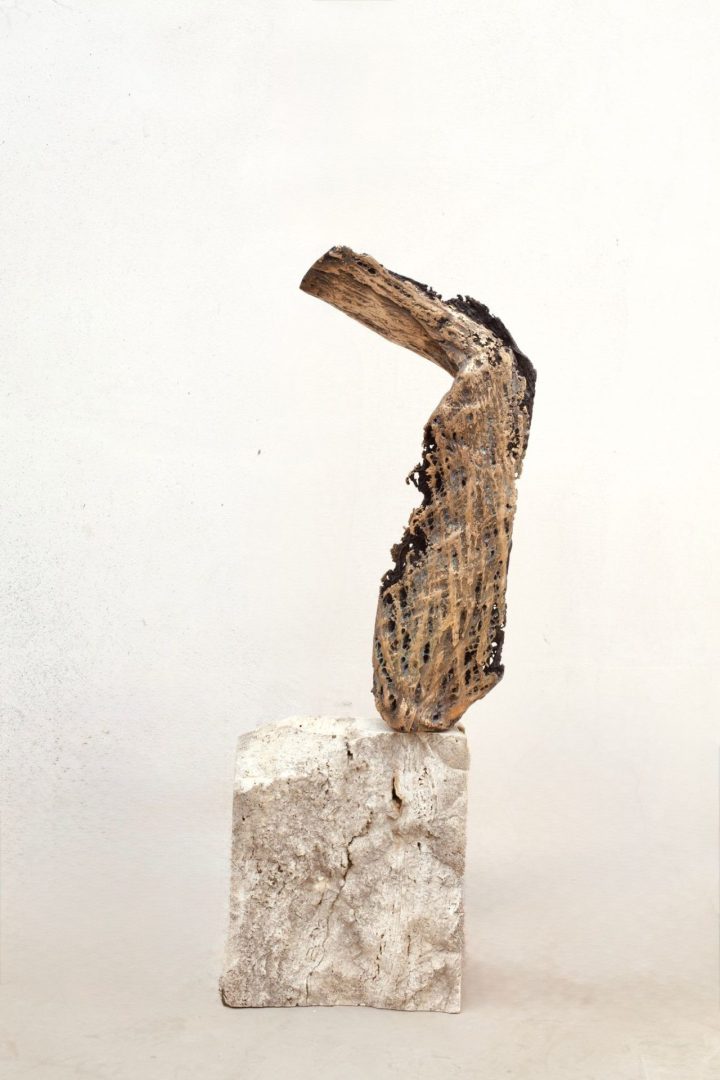
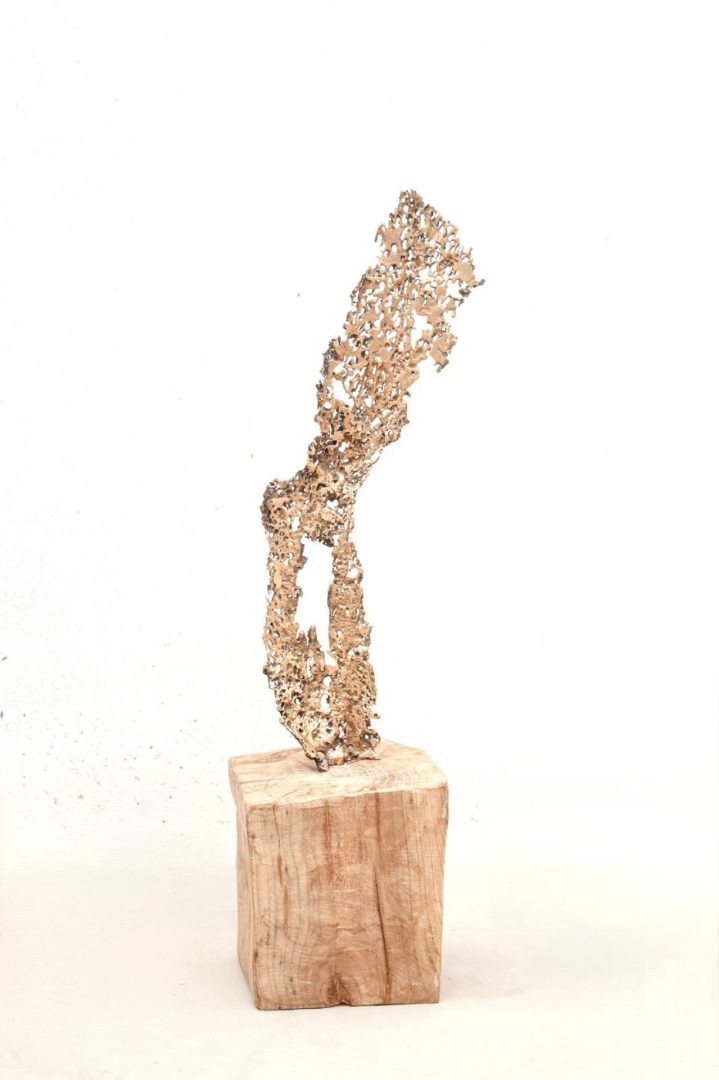
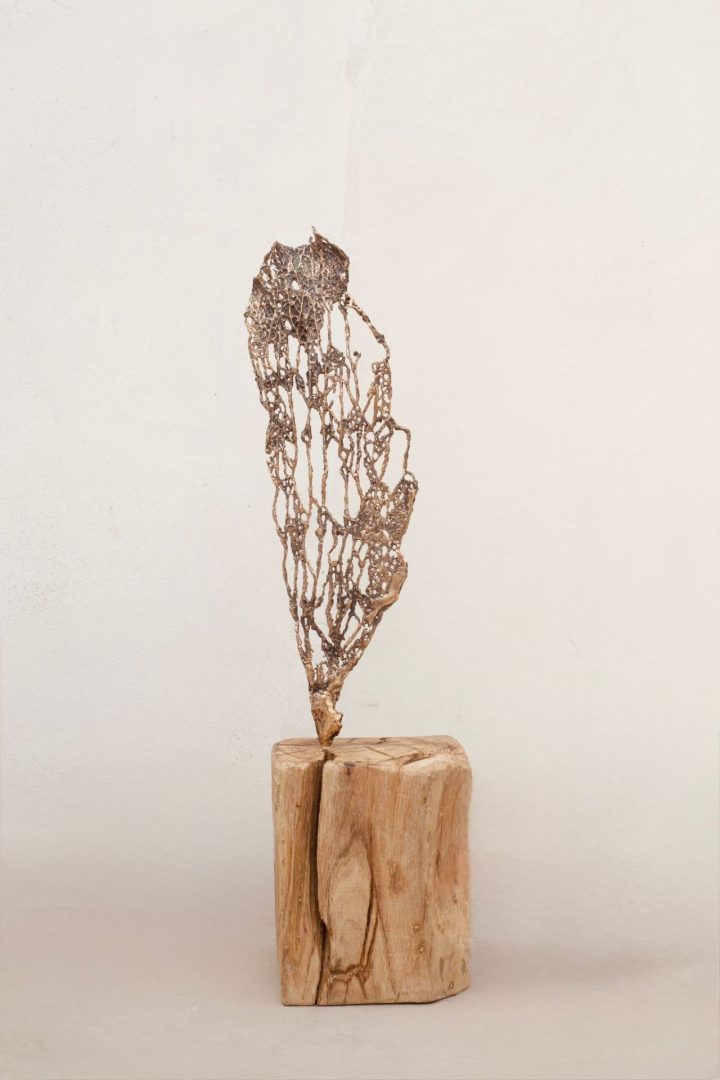
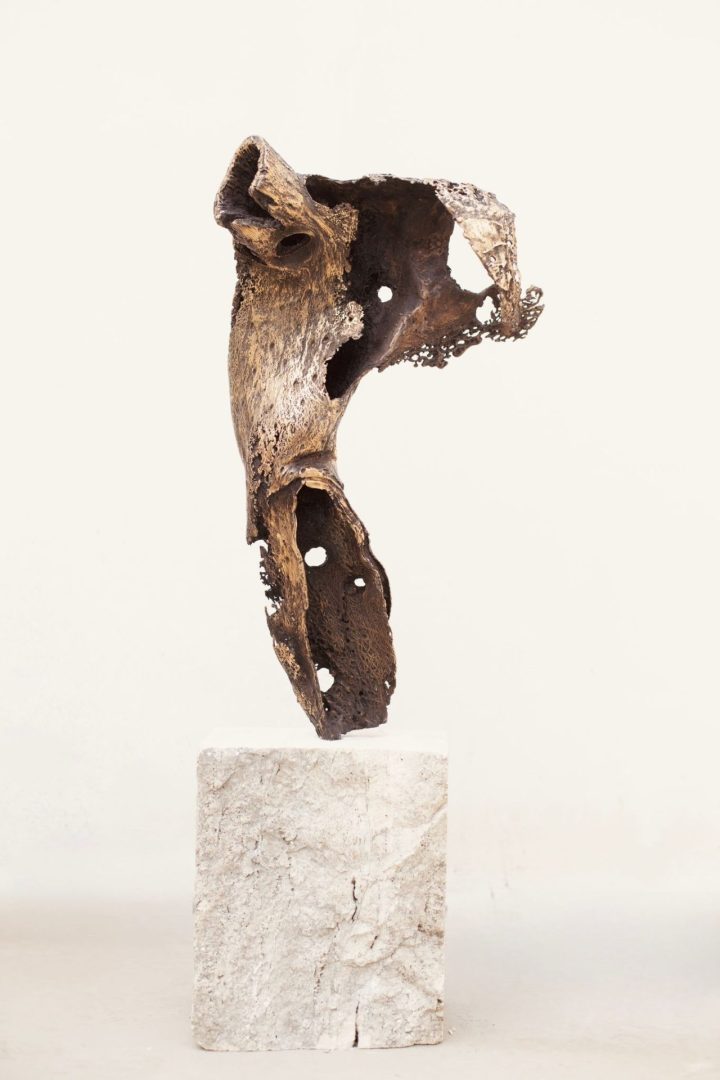
At the heart of her work is a dialogue with nature, approached not merely as a source of inspiration but as a true sculptural matrix. Her most recent research originates from the internal lattice structure of cacti: organisms in which fragility and resilience coexist through intricate networks, cavities and organic geometries.
Through a process of selection and transformation, these natural structures are translated into bronze while preserving the fibres, voids, perforations and tensions of the original material. Bronze thus moves away from its traditional monumental connotations to become a skin, a vibrant surface capable of preserving the memory of a living form over time.
Elena Scategni’s sculptures inhabit a suspended dimension between natural fragment and archaeological artefact, between organism and contemporary relic. Their dialogue with bases made of wood or stone further emphasises the relationship between organic and mineral elements, lightness and density, transformation and permanence.
Her work invites us to observe what normally remains hidden and to recognise within nature’s most intimate structures an existing sculptural language. Rather than imitating it, the artist seeks to reveal it and make it permanent through sculptural matter.

Participants are solely responsible for managing their own content and for obtaining the necessary permissions for the publication of any materials.
If you are the owner of this profile and do not wish to appear on Rome Art Directory, please contact info@romeartdirectory.com to request its removal.
Post
Story
Whatsapp