PATRIZIA GENOVESI
Curatorial Profile
Patrizia Genovesi is a curator, photographer, film director and director of photography. For over twenty years, her work has encompassed artistic production, exhibition design, cinema and research into visual languages. She directs Open Studio Gallery in Rome, a space dedicated to photography, contemporary visual arts and interdisciplinary experimentation, where she develops her own artistic projects and curates exhibitions featuring other artists.
Her curatorial practice is grounded in first-hand knowledge of the processes through which images are created, and draws upon the interaction between artistic research, technical expertise and critical reflection. Photography, cinema, music, theatre and technological languages form part of an investigation that addresses questions of perception, identity, representation and the relationship between individuals and their environment. In developing exhibitions, she pays particular attention to the relationships between artworks, space and viewers, to the construction of visual sequences, and to the potential of different languages to articulate a coherent line of thought.
With a background in science, she has complemented her artistic studies with experience in photography, screenwriting, theatre directing and music. Her teachers in photography include Leonard Freed, Richard Kalvar, Abbas Attar and Moises Saman of Magnum Photos. She studied screenwriting with Mario Monicelli, creative writing with Domenico Starnone, and theatre directing with Renzo Casali, founder of Comuna Baires. The relationship between scientific culture and artistic practice has remained a constant element of her work, helping to shape a method attentive both to formal construction and to processes of interpretation.
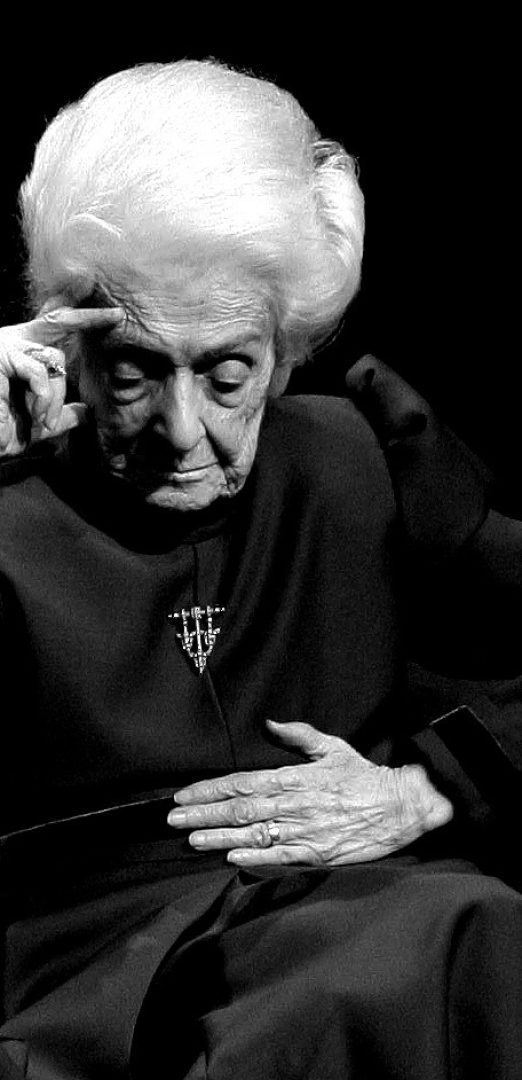
Portraiture occupies a central position in her photographic work. She has photographed leading figures in science, culture and the arts, including Nobel laureates Rita Levi-Montalcini, John Nash, Richard Ernst, Robert Mundell and Frank Wilczek, with portraits published by the Nobel Prize organisation. A portrait of Wilczek was published by the Massachusetts Institute of Technology, while a photographic work devoted to mathematician Andrew Wiles was published by the Japanese publishing house Shinchōsha. Her portraits of Leonard Freed are part of the permanent collection of the Musée de la Photographie in Charleroi, Belgium.
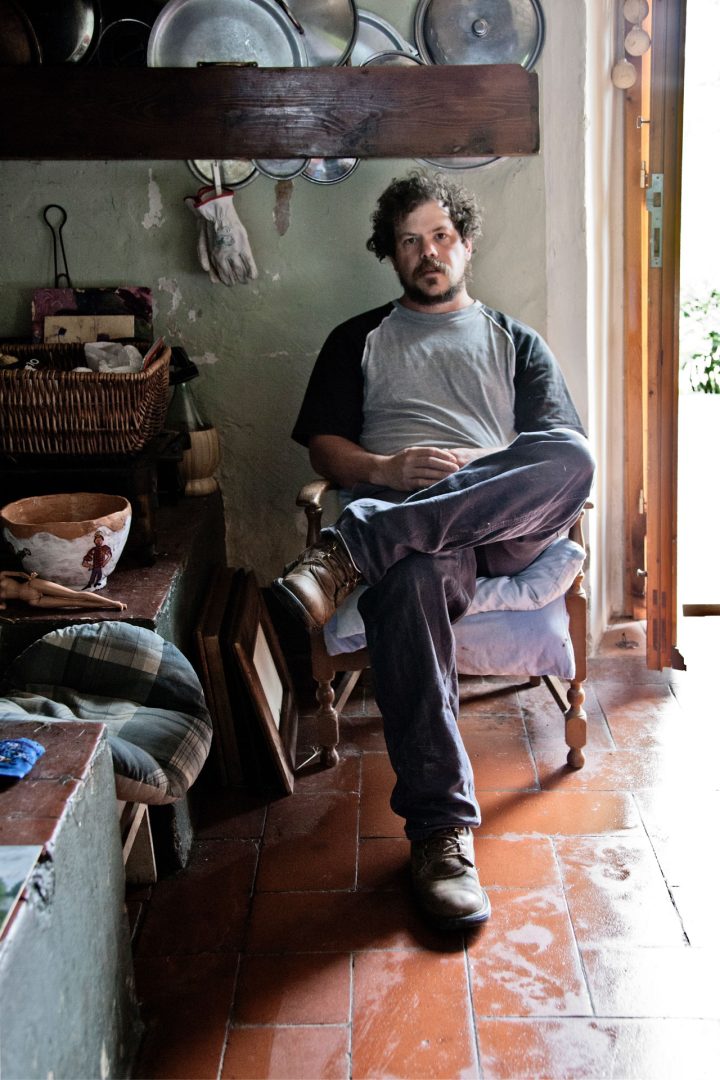
A significant chapter of this research is represented by Painters, a photographic project devoted to contemporary painters working in Italy and the United States, including Ramiro, Nelson White and Ben Fenske, presented by Grenning Gallery in Sag Harbor, New York. The photographs explore the relationship between artists, their working environments and their art. Through natural light, colour and composition, portraiture conveys the relationship between individuals and the worlds they create. This concern also runs through Genovesi's curatorial research: an image is not considered independently of the context in which it originates, the visual languages that precede it, or the relationships it makes possible.
Alongside photography, she has developed substantial experience in film and audiovisual production, working in directing, screenwriting, cinematography and editing. She has contributed to documentaries, filming projects and audiovisual reports for television broadcasters and news organisations, while also developing independent works and projects connected with theatre and performance. Her short films include La nostra commedia (2021), for which she was responsible for the screenplay, direction and editing, which received an award at Contesteco and was a finalist for the Roberto Rossellini International Award; and Pasolini (2022), for which she wrote the screenplay and undertook the direction, cinematography and editing, winning first prize in the professional category at Contesteco 2022. She also served as director of photography on È stato solo un click and has created audiovisual and photographic-video works including Le nozze di Figaro, La pazzia di Lady Macbeth, Trovatore, Attila e Odabella, La morte di Traviata and Codex.
Her experience in cinema and theatre has contributed to the development of a sustained investigation into the relationship between images, action and duration. In her works, photography frequently enters into dialogue with movement, acting, music and scenic construction. This approach finds significant expression in projects devoted to musical and operatic languages, in which visual representation does not serve an illustrative function but offers an independent interpretation of the dramatic content and expressive structures of the work.
Among the most representative projects in this area are Coriolano di Ludwig van Beethoven, a multimedia installation presented at Milan Malpensa Airport and the Biblioteca Vallicelliana in Rome, and Donne di Giuseppe Verdi, a project combining photography, video and music, devoted to contemporary interpretations of the female characters in Verdi's operas. The latter, presented in Rome and Florence, emerged from a study of the operatic works and collaboration with performers and music professionals. The direction of the subjects, bodily movement and the relationship between gesture and emotion become integral elements of photographic construction. Her subsequent research, Genesi di una performance visiva (2026), revisits these themes, focusing on the process through which an artwork comes into being and on the relationships between the artists and the expressive languages involved.
Another established area of her work concerns the relationship between visual arts and scientific knowledge. With Arte e Scienza, presented at the Cultural Association of the Italian Ministry of Foreign Affairs and International Cooperation, subsequently at the Italian Navy's Cultural Association, and at the Italian Cultural Institute in Budapest, Genovesi developed a multimedia project based on dialogue between different ways of observing and representing reality. This line of research continues in COSMOS (2025), an exhibition project in which scientific concepts, geometries and visual structures become elements of an artistic and philosophical reflection on space, time and the relationships between the components of the universe.
Over the years, she has conceived and presented numerous exhibition projects in Italy and abroad, including Scolpire con la luce, Gente di Cinema, Image – Garbatella Storica, Mirame, Simmetrie, regole e schemi nell'arte dell'immagine, Ildegarda di Bingen, Garden Misnake and L'uomo e la sua Harley-Davidson. Her work has been presented in galleries and institutional venues, including the Auditorium Parco della Musica in Rome, the Italian Cultural Institute in Budapest and Grenning Gallery in Sag Harbor. She has also participated in exhibitions and events devoted to photography and contemporary art, including MIA Fair, ADI Design Museum and the Natural History Museum in Milan.
Through Open Studio Gallery, her curatorial activity extends to the presentation and promotion of work by other artists. She has curated photographic exhibitions and interdisciplinary projects, including Gli ospiti, featuring works by Federica Sarto and Sofia Iacobini, presented in 2023 as part of the Spiritualia Festival, and Istanti di Classica, devoted to the photography of Massimo Bottarelli and Alberto Placidoli. Her curatorial work encompasses the definition of the cultural concept, dialogue with the artists, the development of critical content and the organisation of relationships between artworks and exhibition space. Alongside her personal artistic production, this activity constitutes an autonomous dimension of her work, dedicated to the interpretation and contextualisation of different artistic languages and approaches.
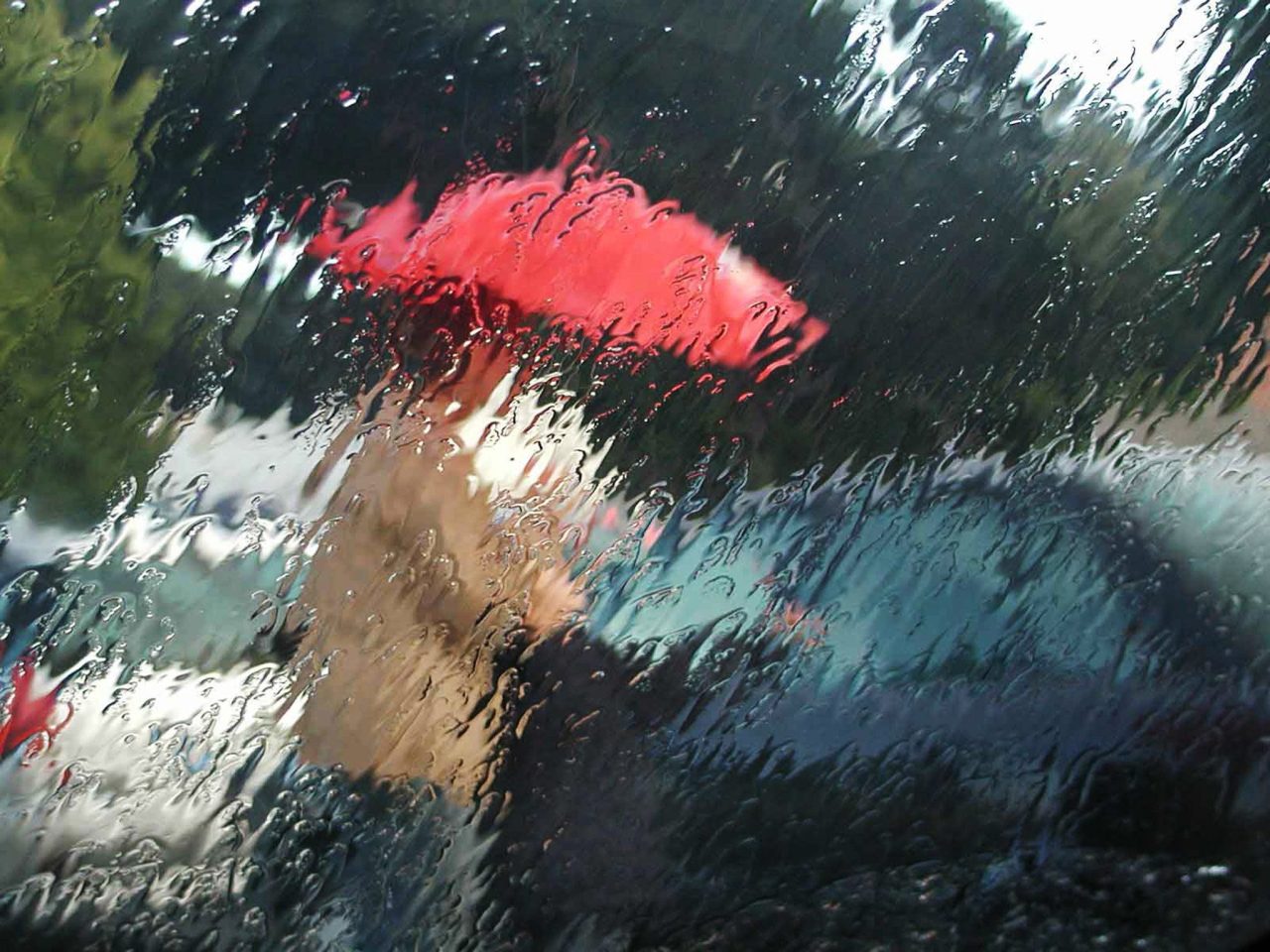
In recent years, Genovesi's research has focused particularly on the processes through which identity is constructed, on perception, and on the transformations introduced by digital environments. With IDENTITY (2025), an exhibition and curatorial project developed at Open Studio Gallery, she brought together fine-art photography, urban space and digital representation, involving artists working through different approaches. Sections devoted to Garbatella and Copenhagen examine the relationship between urban form, memory, belonging and the construction of the self. The works of the participating artists extend the investigation into the gaze, perception and the conditions of contemporary experience.
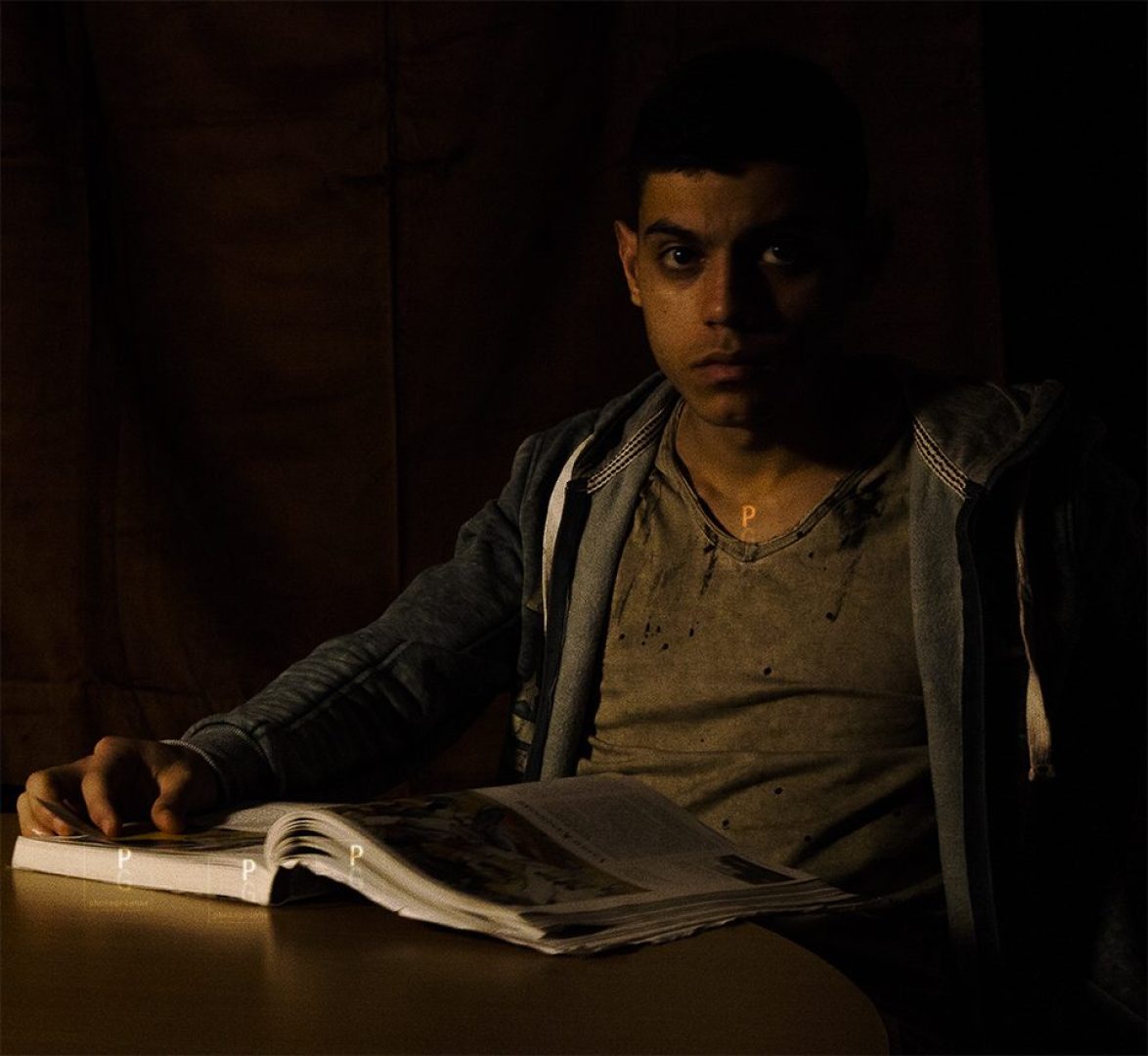
This research continues in Metamorfosi dell'emozione. Nel ritratto (2026), a photographic project devoted to the relationship between identity, interpretation and emotion. The work explores what emerges when a person interprets a figure who actually existed, through a succession of gestures, postures and expressions that progressively blur the boundary between the evoked character and the interpreter's own experience. Video sequences developed from the original photographs extend in time certain movements already suggested by the still images. Technology is employed as a tool within a research process that remains centred on portraiture and the human experience of representation.
Alongside her artistic production and curatorial activity, Genovesi pursues independent theoretical research into photographic culture, perception and the relationship between vision and consciousness. Her writings include Lee Miller. Sguardo, identità e testimonianza nel Novecento fotografico, Gianni Berengo Gardin. Sguardo relazionale, metodo e figure (1954–2025) and Dove siamo quando siamo online? Non-luoghi della coscienza, della visione e dell'identità nell'era digitale, circulated in 2025 as independent research preprints. Through historical analysis and theoretical reflection, these writings address questions that also run through her artistic production: the nature of the gaze, the relationship between the author and the world, identity as situated experience, and the transformations brought about by technologies of representation.
Teaching and public engagement form another important component of her professional and intellectual activity. She teaches cinematography and film directing at the Libera Università del Cinema in Rome, with which she has collaborated since 2005. She has conducted masterclasses, seminars and public lectures on photography, cinema, visual arts and visual perception, including in collaboration with Roma Tre University, the Italian Space Agency, the Italian National Institute for Nuclear Physics, the Capitoline Museums and other cultural and scientific institutions. Her teaching encompasses both the technical and narrative aspects of image-making and the historical and critical analysis of artworks and visual languages.
She is Vice-President of AFIP International, a professional photography association through which she participates in initiatives promoting photographic culture and professional dialogue.
Throughout her career, curating has taken shape as a practice that brings together artistic experience, knowledge of visual languages and a responsibility towards interpretation. An exhibition is not conceived as a mere presentation of artworks, but as the construction of a context in which images, artists and audiences enter into dialogue. Through the continuity between her personal research, theoretical work and exhibition design, Patrizia Genovesi pursues an investigation into the forms of vision and the cultural, perceptual and technological conditions through which images acquire meaning.
Virtual Tour
Video


Participants are solely responsible for managing their own content and for obtaining the necessary permissions for the publication of any materials.
If you are the owner of this profile and do not wish to appear on Rome Art Directory, please contact info@romeartdirectory.com to request its removal.
Post
Story
Whatsapp